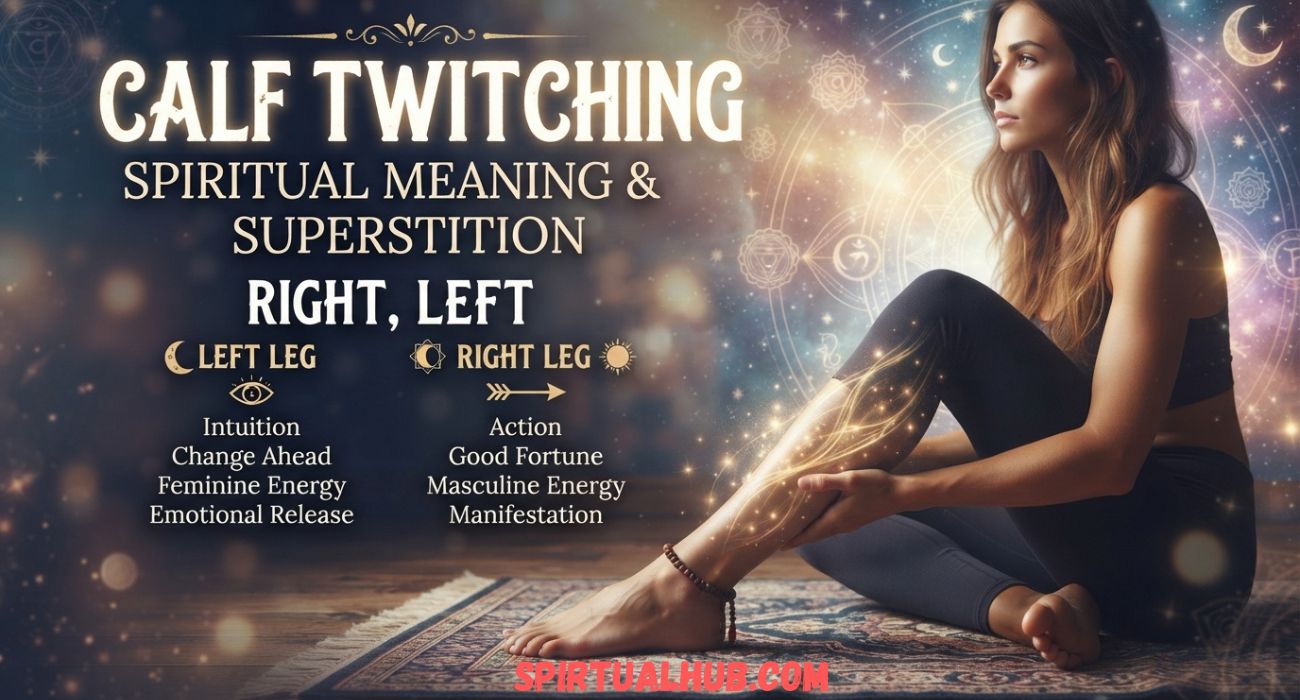
Calf Twitching Spiritual Meaning & Superstition (Right, Left)
Calf twitching spiritual meaning refers to the belief that a sudden twitch in your calf carries a hidden message. It is not just a random body movement. Many cultures see it as a small sign from your body or spirit.
Have you ever felt your calf twitch out of nowhere? It happens fast, then it’s gone. But what if that tiny moment actually meant something more?
This belief mixes old superstition with spiritual thinking. It looks at which side twitches, left or right. It also considers whether you are a man or a woman.
What Does a Calf Muscle Twitching Symbolize Metaphysically?
A calf muscle twitch is more than a random flicker under your skin. In many spiritual traditions, the legs represent your path in life. The calves carry you forward every single day. So a twitch here often points to forward movement or a coming change. This idea shows up again and again in spiritual beliefs from many different regions.
Metaphysically, involuntary muscle movement is often read as a message from your energy field. Some believe your body reacts before your mind understands what is happening. This is why people connect calf muscle twitching to inner awareness and hidden feelings. The body speaks in small signals long before the mind catches up. A twitch may simply be your body announcing a shift that your logic has not noticed yet.
Of course, there is also a simple medical side to this. Doctors often link twitching to tiredness, dehydration, or low magnesium levels. This article does not ignore that fact. But spiritual meaning of calf twitching looks beyond biology. It asks what the moment means, what you were thinking about, and what is changing in your life right now.
Read Also: Thigh Twitching Superstition & Spiritual Meaning (Right, Left)
12 Spiritual Meanings of Calf Twitching
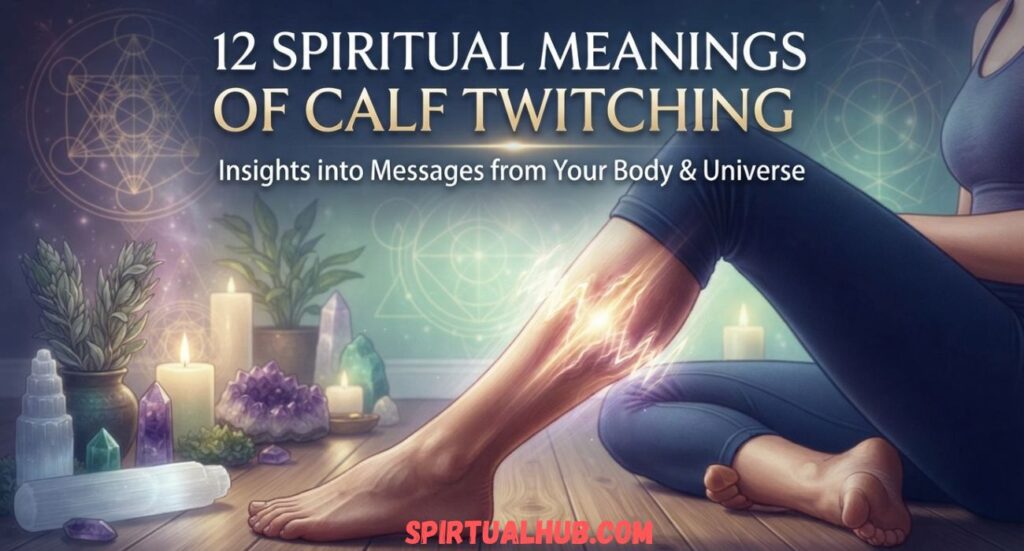
There is not just one explanation for this small body movement. Different traditions and teachers offer different views. Below are eight of the most common spiritual meanings of calf twitching found across cultures. Each one connects to a different part of your life and mindset.
These meanings often overlap with one another in real life. You might feel more than one at the same time. That is completely normal and expected with spiritual signs. Read through each one and see which feels true for your current season of life.
Many people find comfort in these explanations during confusing times. A twitch becomes a small prompt to pause and reflect. It is not proof of anything certain, but it offers gentle guidance. Let’s look at each meaning closely.
1. A Sign of Moving Forward and Realignment
The calf muscle helps push your body forward with every step you take. So a twitch here is often read as a nudge toward forward movement. It may be telling you that it’s time to act on a decision you’ve been avoiding. Many believe this twitch appears right before a big life change begins.
This meaning connects strongly to personal growth. You may feel stuck in a job, relationship, or daily routine. The twitch arrives almost like a whisper telling you to take the next step. It is a call for spiritual alignment between where you are and where you want to be.
Some spiritual teachers describe this as your body’s way of realigning with your true path. You may have been ignoring your gut feelings for weeks. This twitch becomes a physical reminder to trust that inner voice again. It pushes you gently toward action instead of hesitation.
2. A Reminder to Strengthen Your Inner Foundation
Your calves support your entire body weight every single day. Because of this, they symbolize inner stability and a strong foundation. A twitch in this area can mean it’s time to strengthen your personal base. This might mean your finances, your habits, or your emotional health.
Grounding is a common theme tied to this meaning. You may feel scattered, unfocused, or unsure of your next move. The twitch is a gentle nudge to slow down and rebuild your routine. Simple habits like rest, good food, and quiet time can help restore this balance.
This meaning also touches on responsibility. Many people feel this twitch during periods of major decision-making. It reminds you to build things on solid ground, not on rushed choices. A strong foundation now prevents bigger problems later in life.
3. A Physical Response to Energy Shifts
Many spiritual practices believe the body holds and moves invisible energy. A calf twitch can be a sign of sudden energy shifts happening around you. This may be linked to a change in your environment, your relationships, or your mood. The body simply reacts to these unseen changes first.
This is closely tied to chakra beliefs found in many Eastern traditions. The lower body, including the legs and calves, connects to the root chakra. This chakra governs safety, stability, and survival instincts. A twitch here may point to shifts in how safe or secure you currently feel.
People who practice meditation often report noticing these twitches more clearly. As inner awareness grows, the body becomes more sensitive to these shifts. What once went unnoticed suddenly feels obvious and meaningful. This is often described as the body “catching up” with the spirit.
4. A Reflection of Cultural Messages or Ancestral Communication
Many older traditions believe our ancestors communicate through small body signs. A twitching calf can be seen as a message passed down through generations. This belief is common in South Asian, African, and Middle Eastern folklore. It treats the body as a bridge between the living and those who came before.
Ancestral communication is taken seriously in many households, even today. Elders often teach children what each twitch or sign means. These beliefs get passed from parent to child for many years. They become part of daily conversation, almost like weather predictions.
This meaning reminds us that spiritual practices are shaped by cultural beliefs. What feels strange in one country feels completely normal in another. A twitch may carry family history and centuries of shared belief behind it. It connects the present moment to a much older story.
5. A Bodily Response to Emotional States
Our bodies often react physically to strong feelings we try to hide. Stress, worry, and excitement can all trigger small muscle movements. A calf twitch may simply reflect built-up emotional stress you haven’t released yet. The body finds a way to express what words cannot say.
This connects closely to emotional shifts happening beneath the surface. You may be nervous about an upcoming event without fully realizing it. The twitch becomes proof that your emotions are active, even if your mind feels calm. It is a subtle but honest signal from within.
Many therapists and spiritual guides agree that the body holds emotion. A calf twitch might ask you to check in with your true feelings. Are you anxious, excited, or holding something back? Taking a moment to reflect can bring real emotional balance and clarity.
6. A Sign of Awakening or New Awareness
Some people report frequent twitching during periods of major personal change. This is often linked to spiritual awakening, especially in New Age teachings. As your awareness grows, your body may become more sensitive to energy. The twitch becomes a small signal that something within you is shifting.
This kind of awakening usually happens slowly, not all at once. You may start noticing patterns, coincidences, or stronger gut feelings. The calf twitch fits into this bigger picture of growing inner awareness. It shows that your mind and body are becoming more connected.
People going through this shift often describe feeling “more alive” than before. Small sensations that once went unnoticed suddenly feel important. This meaning invites you to pay closer attention to your daily life. Awakening rarely announces itself loudly; it often starts with quiet signs like this.
7. A Symbol of Innocence, Renewal, and Healing
In some traditions, the lower body represents fresh starts and new beginnings. A calf twitch can symbolize renewal, much like the start of spring after winter. It may point to a healing process already happening inside you, even if you can’t see it yet. This meaning brings a sense of hope rather than worry.
This is especially common after a difficult period in life. You may have just ended a relationship, left a job, or recovered from illness. The twitch can be read as your body celebrating small progress. It marks the quiet, steady steps of healing that often go unnoticed.
This meaning encourages patience with yourself during hard times. Healing rarely happens overnight; it moves slowly and gently. A twitch like this reminds you that you are moving forward, even in small ways. Renewal is happening, even when it feels invisible.
8. A Traditional Omen Linked to Travel, Change, or Warnings
Older folk traditions often treat body twitches as traditional omens. A calf twitch has long been linked to upcoming travel or sudden change. In some cultures, it even serves as a gentle warning to stay careful. This belief has survived for generations through oral storytelling.
This is one of the oldest interpretations tied to twitching superstition worldwide. Villagers and elders once used these signs to prepare for journeys. A twitch before a trip might mean the travel will go smoothly. Or, depending on the side, it could suggest caution is needed.
Even today, many people still pause when this happens before a big trip. It becomes a small ritual of awareness rather than fear. Whether or not you believe it fully, the habit of noticing brings mindfulness. It turns a simple body movement into a moment of reflection.
9. A Signal of Building Motivation and Drive
A calf twitch can sometimes point to rising motivation deep inside you. You may be preparing for something big without fully realizing it yet. This meaning connects to the leg’s role in physical drive and action. It suggests your body is gathering energy before you take a bold step.
Many people notice this twitch during periods of quiet planning. You might be thinking about a career move or a personal goal lately. The twitch arrives almost like a spark before the flame catches fully. It reflects growing determination that hasn’t turned into action yet.
This meaning fits closely with the idea of personal growth discussed earlier. It reminds you that motivation often builds slowly, not all at once. A twitch like this can be a gentle push toward starting today. Small sparks like this often lead to real, lasting change.
10. A Sign of Taking on New Responsibility
Some spiritual teachers link calf twitching to a growing sense of responsibility. This might involve a new role at work, at home, or within your family. The legs carry weight, so they naturally symbolize carrying new duties. A twitch here can mark the start of this shift.
This meaning often appears during major life transitions, like a new job or new baby. You may feel more pressure than usual, even if things feel calm outside. The twitch reflects this quiet internal shift toward greater duty. It shows your body adjusting to a heavier, more meaningful load.
While this meaning can feel heavy, it also carries a hopeful side. Taking on responsibility often means you are trusted and capable. This twitch can serve as quiet encouragement during a busy, demanding season. It reminds you that you are ready for what comes next.
11. A Reflection of Shifting Relationships
Calf twitching is sometimes tied to changes happening within close relationships. This could involve family, friendships, or romantic partnerships in your life. The body often reacts to emotional closeness or distance before the mind notices. A twitch may point to a shift already forming beneath the surface.
This meaning connects strongly to relationship changes mentioned earlier in this guide. You might be growing closer to someone or slowly drifting apart. The twitch does not say which direction the change will take. It simply signals that movement is happening within that bond.
Many people find this meaning helpful during uncertain relationship moments. It encourages honest conversation instead of silent worry. A twitch like this can prompt you to check in with someone you love. Small check-ins often prevent bigger misunderstandings later on.
12. A Message of Trusting Your Intuition
The final common meaning ties directly to intuition and inner knowing. A calf twitch can feel like your gut speaking louder than usual. It often appears right when you are unsure about a decision. This meaning asks you to trust your first instinct more fully.
Many spiritual guides describe intuition as a quiet voice we often ignore. Life gets busy, and logical thinking usually takes over instead. A twitch like this interrupts that pattern for just a moment. It gives your inner voice a small chance to be heard.
This meaning works well alongside higher guidance discussed in later sections. It suggests that answers you seek may already be within you. The twitch simply asks you to pause and listen closely. Trusting yourself often leads to clearer, calmer decisions.
Meaning Of Twitching In Female Body Parts Left/Right
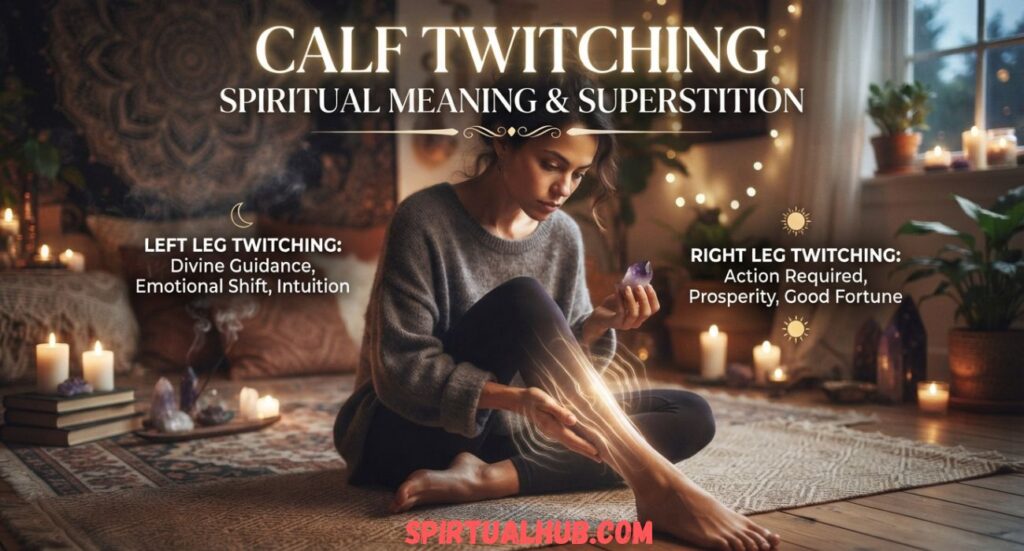
Female body twitching carries its own set of traditional meanings in folklore. Many cultures believe the right side of a woman’s body brings good news. This includes twitching in the eye, hand, or leg area. These beliefs often connect to family, relationships, and upcoming events.
The left side, on the other hand, is often linked to caution in these same traditions. A twitch on the left side body twitching for women might suggest emotional stress ahead. Some believe it warns of unexpected news or a delay in plans. These interpretations vary widely between regions and families.
It’s important to remember these are traditional beliefs, not scientific facts. Different cultures even reverse these meanings completely. In some parts of the world, left is considered lucky for women instead. This shows how spiritual meaning of twitching always depends on where you were raised.
Meaning of Twitching In Male Body Parts Left/Right
Male body twitching often follows a mirrored pattern compared to female interpretations. In many traditions, the right side for men is linked to success and gain. This might mean financial gain, career progress, or good fortune arriving soon. The right side is often seen as the stronger, more active side in these beliefs.
The left side for men frequently carries warnings in older folklore. It’s often tied to financial loss, obstacles, or minor setbacks ahead. Some traditions also link it to relationship tension or unexpected challenges. As with female interpretations, these ideas shift depending on the culture.
These gendered differences come from very old belief systems. Many were shaped by twitching astrology and early folk practices like Samudra Shastra in India. While modern readers may see them as superstition, they still hold cultural value. They remain part of daily life and conversation in many households today.
Meaning of Right Calf Twitching and Left Calf Twitching
Now let’s focus directly on the calf itself, since sides matter greatly in folklore. The right calf twitching meaning and left calf twitching meaning are often treated as opposites. This section breaks down what each side commonly represents. Understanding the side helps you interpret the message more clearly.
| Side | Common Meaning | Associated Feeling |
| Right Calf | Good news, progress, positive energy | Excitement, motivation |
| Left Calf | Caution, delay, need for reflection | Uncertainty, patience |
These meanings are not fixed rules but general patterns seen across many traditions. Your own intuition often matters just as much as folklore. Use this table as a starting point, not a final answer.
Right Calf Twitching Meaning
A twitch in the right calf is usually seen as a positive sign. Many traditions connect it to good luck and forward progress in life. It may point to unexpected news arriving soon, often something exciting. This side is generally viewed as the more favorable one across most cultures.
This twitch can also hint at an upcoming journey with a smooth outcome. Some believe it signals financial improvement or a new opportunity opening up. It fits well with the broader theme of forward movement discussed earlier. The right side often represents action, energy, and momentum.
For many people, this twitch feels encouraging rather than worrying. It arrives almost like a quiet cheer from the universe. While it should never replace real planning, it can offer emotional comfort. It reminds you that good things may be closer than they seem.
Left Calf Twitching Meaning
A twitch in the left calf often carries a more cautious meaning. Many traditions link it to delays, emotional stress, or the need to slow down. It doesn’t always mean something bad will happen. Instead, it usually asks you to pause and think things through carefully.
This side is sometimes connected to relationship changes or minor conflicts at home. It may also point to small financial setbacks or unexpected expenses. The message here is rarely severe; it’s more of a gentle warning. Think of it as a yellow light rather than a red one.
Many spiritual guides suggest using this twitch as a moment for reflection. Ask yourself what feels unsettled in your life right now. This twitch encourages patience instead of rushing into new decisions. It supports emotional balance by slowing you down when needed.
| Aspect | Left Calf Twitching Meaning |
|---|---|
| General Sign | Caution or delay |
| Emotional Link | Emotional stress, need for reflection |
| Relationships | Minor tension or unspoken worry |
| Finances | Small setback or unexpected cost |
| Travel | Delay or need for careful planning |
| Best Response | Slow down, observe, wait before deciding |
Calf Twitching Superstitions for Females and Males
Calf twitching superstition takes on different forms depending on gender in many traditions. These beliefs have been shared through generations, often by grandparents and elders. They mix practical wisdom with old folklore passed down over centuries. Understanding these differences adds depth to the overall topic.
While the meanings often differ, the purpose behind them stays the same. Both versions try to explain sudden body sensations using cultural wisdom. They offer comfort, caution, or excitement depending on the situation. Let’s look closer at how these beliefs split by gender.
These superstitions remain popular today, even in modern households. Many people still mention them casually in daily conversation. Whether taken seriously or not, they remain part of shared cultural memory. They connect generations through simple, spoken tradition.
Superstitions Held by Females
In many households, calf twitching for females is linked closely to family news. A twitch, especially on the right side, might suggest a visitor is coming soon. Others believe it hints at good news about a loved one. These beliefs often center around home and relationships.
Some traditions also connect this twitch to romantic developments. A twitch might be read as a sign that someone is thinking about you. This belief ties closely to intuition and emotional connection between people. It reflects how folklore often blends emotion with prediction.
On the more cautious side, a left calf twitch for women may suggest minor family tension. It could point to a small disagreement or emotional stress at home. These meanings stay mild rather than extreme in most traditions. They encourage awareness rather than fear.
Superstitions Held by Males
For calf twitching for males, the focus often shifts toward work and money. A right calf twitch is commonly linked to career progress or financial reward. Many believe it signals a promotion, bonus, or new opportunity arriving soon. This ties closely to the theme of financial gain discussed earlier.
Travel-related beliefs are also common for men in many cultures. A twitch might suggest an upcoming journey, often for work or business. Some believe the trip will bring success if the twitch appears on the right side. This connects back to the idea of traditional omens tied to travel.
On the left side, warnings tend to focus on setbacks or delays. This might mean a project stalling or unexpected costs appearing. Again, these meanings stay moderate rather than alarming. They serve mainly as gentle reminders to stay prepared and careful.
Cultural and Religious Interpretation
Cultural beliefs around body twitching stretch back thousands of years. Nearly every region of the world has its own version of this idea. Some interpretations come from religious texts, while others come from spoken folklore. This section explores how different parts of the world understand this sign.
Despite the distance between these cultures, many shared themes appear again and again. Right often means positive, while left often means caution. This pattern repeats across continents, even without direct contact between these societies. It suggests something universal about how humans read their own bodies.
Religious interpretations often add a spiritual layer beyond simple prediction. They frame twitching as a message from a higher power or unseen force. This connects strongly to the idea of higher guidance working through the body. Let’s explore three major regions in more detail.
Read Also: Right Eye Twitching Superstition Meaning: 12 Spiritual Signs, Luck & Hidden Messages
Ancient Belief Systems
Ancient Greek and Roman texts included early writings about body twitching spiritual meaning. Scholars at the time believed the body reacted to unseen forces around it. These early records treated twitching as a form of natural prediction. This idea influenced later European folklore for centuries afterward.
These ancient belief systems often mixed astrology with body signs. A twitch might be read alongside the position of the stars or moon. This blending of science and spirituality was common before modern medicine existed. It shows how early humans tried to explain the unexplainable.
Many of these ancient ideas still echo in modern superstition today. Even people who don’t follow astrology sometimes repeat these old sayings. This shows how deeply rooted these beliefs became over time. They quietly shaped how we still talk about the body today.
African and Middle Eastern Views
African traditions often view body twitching as a message from spirits or ancestors. Elders in many communities pass down specific meanings for each body part. A calf twitch might be discussed openly during family gatherings. These beliefs remain strong parts of daily cultural life.
In Middle Eastern folklore, twitching is sometimes tied to fate and destiny. Right-side twitches are commonly seen as blessings from a higher power. Left-side twitches may serve as gentle warnings to remain cautious. These beliefs often blend religious faith with older folk traditions.
Both regions share a strong respect for oral storytelling and shared wisdom. These interpretations are rarely written down in formal texts. Instead, they live on through conversation, much like the ancestral beliefs mentioned earlier. This keeps the tradition personal and community-centered.
South Asian Interpretations
South Asian beliefs offer some of the most detailed twitching interpretations in the world. The ancient system known as Samudra Shastra outlines specific meanings for nearly every body part. This includes detailed notes on right calf twitching and left calf twitching separately. It remains widely referenced even today.
Indian superstition often ties these meanings closely to gender, much like earlier sections discussed. Men and women receive different interpretations for the same twitch location. This system also considers timing, such as the day or hour it happens. It reflects a highly detailed and structured approach to twitching astrology.
These interpretations remain popular across South Asia and among diaspora communities worldwide. Many families still consult elders or astrologers about specific body signs. This tradition shows how deeply personal and detailed twitching beliefs can become. It remains one of the richest sources of information on this topic.
Is Calf Twitching a Bad Luck Sign?
This is one of the most common questions people ask about this topic. The honest answer is that it depends entirely on the tradition you follow. There is no single, universal answer that applies to everyone. Calf twitching bad luck beliefs exist, but so do calf twitching good luck beliefs.
In most traditions, the right calf leans toward positive meaning rather than bad luck. The left calf often leans toward caution, but rarely predicts true disaster. These are gentle twitching signs, not fixed, guaranteed outcomes. Treating them as absolute fact ignores how varied these beliefs really are.
It also matters to remember the medical side of this topic. Frequent or ongoing twitching can come from simple causes like fatigue or dehydration. If a twitch continues for a long time, seeing a doctor is a smart step. Spiritual meaning can offer comfort, but health always comes first.
FAQ,S
Why is my left calf twitching spiritually?
Spiritually, a left calf twitch may symbolize emotional release, inner change, or a need to move forward. These beliefs are symbolic, not scientifically proven.
What does it mean when your left calf twitches?
Some spiritual traditions associate it with upcoming changes, intuition, or emotional energy. Medically, muscle twitching often has ordinary causes such as stress or fatigue.
What does it mean when your left twitches spiritually?
A twitch on the left side is sometimes linked with receiving energy, intuition, or reflection in spiritual beliefs. Meanings vary across traditions.
What does body twitching mean in astrology?
Astrology may interpret body twitching through planetary influences, energy shifts, or traditional omens. These interpretations differ between cultures and are not scientific facts.
What does body twitching mean spiritually?
Spiritually, body twitching may be viewed as a sign of energy movement, emotional release, or heightened awareness. There is no universal spiritual meaning.
Conclusion
Calf twitching spiritual meaning and superstition teaches us to notice small signs in daily life. A twitch in the calf can point to change, energy, or growth. The right side often brings good news. The left side asks for patience and care. These beliefs come from many cultures around the world. They connect the body to deeper meaning.
This guide explains calf twitching spiritual meaning and superstition in a clear way. It helps readers understand both sides, left and right. It also explains meanings for men and women. Everyone can use this knowledge to reflect on their own life. Remember to see a doctor if twitching continues for a long time. Spiritual meaning offers comfort, but health always comes first.
Related Guides:
1: Chin Twitching Superstition and Spiritual Meaning
2: Single Long White Hair Superstition and Spiritual Meaning
3: Spiritual Meaning of Breaking Glass Accidentally: What It Really Means
4: Spiritual Meanings of Finger and Hand Twitching & Superstitions
5: Left Foot Itching Meaning, Superstitions, and Spiritual Insights