
Right Eye Twitching Superstition Meaning: 12 Spiritual Signs, Luck & Hidden Messages
Right eye twitching is a small movement of the muscles around the right eye. It can happen without warning and usually lasts for a short time. Many people also connect it with spiritual beliefs and old traditions.
A simple eye twitch may seem unimportant at first. Yet many cultures believe it carries a hidden spiritual message. This belief has made people curious for many generations.
The right eye twitching spiritual meaning is often linked with change, good fortune, and spiritual guidance. Some traditions also connect it with intuition, personal growth, and positive energy. These beliefs encourage people to stay calm and pay attention to life’s small signs.
What Does It Mean When Your Right Eye Twitches?
Before diving into spiritual beliefs, it helps to understand the medical explanation first. Doctors call this condition myokymia, which is simply an involuntary eye twitch caused by small muscle spasms around the eyelid. This is usually harmless and often linked to stress, tiredness, too much caffeine, or lack of sleep. Most cases of eyelid twitch go away within a few days without any treatment at all.
Once we move past the medical explanation, the eye twitching superstition side of things becomes far more interesting. Across history, people have treated bodily sensations as messages from the universe, ancestors, or higher powers. A twitch was never just a muscle spasm to our ancestors; it was a sign worth paying attention to. This belief system still lives on strongly today, especially in Asia, Africa, and parts of the Middle East.
In most traditions, the right side of the body is linked to masculine energy, action, and the external world, while the left side represents feminine energy and inner life. This is why a right eye twitching omen often carries a different meaning than a twitch on the left side. Keep this idea in mind as we explore the deeper spiritual messages tied to this common bodily sign.
Read Also: Brown Butterfly Spiritual Meaning: 10 Powerful Symbolism & Messages
12 Spiritual Meanings of Right Eye Twitching and Messages
When we look past superstition and folklore, many spiritual teachers believe the body sends subtle signals when something important is shifting inside us or around us. A right eye twitching spiritual message is often seen as the universe tapping you on the shoulder, asking you to pay closer attention to your life. This section breaks down the twelve most common spiritual interpretations people connect with this experience.
These meanings are not scientific facts, but they represent centuries of shared human belief passed down through generations. Many people find comfort or guidance in interpreting a twitch this way, especially during uncertain times in their lives. Below, we explore each spiritual meaning in detail, one at a time.
Think of these interpretations as gentle nudges rather than fixed predictions. A right eye twitching symbolism can shift depending on your personal situation, your emotional state that day, and even the culture you grew up in. Let’s explore all twelve meanings closely.
1. Transformation and Change
Many spiritual practitioners believe a twitching right eye signals upcoming life changes in your career, relationships, or personal path. This is often described as spiritual transformation, a quiet warning that your current chapter is ending soon. The twitch acts almost like a whisper telling you to prepare your mind and heart for something new.
This meaning becomes especially relevant if you have been feeling stuck or unsatisfied lately. The universe, according to this belief, uses small physical signs to nudge us toward growth we may be avoiding. People who notice repeated twitching during a period of indecision often view it as confirmation that change is both necessary and near.
Rather than fearing this sign, spiritual believers suggest embracing it with curiosity. Change, even when uncomfortable, often leads to personal growth and better circumstances down the road. A twitch here is less a warning of danger and more an invitation to release what no longer serves you.
2. Emotional Release

A common interpretation ties the twitch to built-up feelings that need an outlet. This is often labeled emotional release, suggesting your body is physically expressing tension you have been holding inside for too long. Many spiritual teachers believe suppressed emotions eventually find a way to surface, and the eye is a sensitive area where this often shows first.
This meaning connects closely to emotional healing, encouraging the person to check in with their mental and emotional state honestly. If you have been holding back tears, frustration, or grief, the twitch may be a gentle reminder to let those feelings move through you rather than staying bottled up. Ignoring emotions rarely makes them disappear.
People who follow this belief often use the twitch as a cue to pause, breathe, and reflect on what they have been avoiding emotionally. Journaling, talking to a trusted friend, or simply allowing yourself to cry can be helpful responses. The twitch, in this sense, becomes a small but meaningful invitation toward inner balance.
3. Heightened Intuition
Another popular belief connects the right eye to heightened intuition, almost like your inner voice is trying to get louder. This is closely tied to the idea of third eye awakening, where your sixth sense becomes more active and aware than usual. Many spiritual communities see this twitch as confirmation that your gut instincts are especially sharp right now.
If this meaning resonates with you, it may be worth paying closer attention to any strong feelings or hunches you experience over the following days. Inner wisdom often speaks quietly, and a physical sign like this can serve as a reminder to actually listen instead of dismissing it. Trusting yourself becomes easier once you recognize these subtle nudges.
This belief encourages people to slow down and notice patterns in their thoughts and feelings. A twitch during this heightened state might coincide with important decisions, unexpected meetings, or moments of clarity. Many describe this period as one where their intuition feels unusually accurate and worth honoring.
4. Creative Energy
Some spiritual circles interpret the twitch as a spark of creative inspiration trying to break through. This connects to broader ideas of energy shifts moving through the body, encouraging artistic or innovative thinking. Writers, artists, and musicians sometimes report noticing eye twitches right before a burst of inspired work.
This meaning suggests that now is a good time to start a new project or revisit an old creative idea you set aside. The twitch, in this context, acts as encouragement rather than warning, almost cheering you toward self-expression. Many spiritual teachers believe creative blocks often clear during these periods.
If you have been feeling creatively stuck, this interpretation offers a hopeful nudge to pick up that paintbrush, pen, or instrument again. The universe, according to this belief, rewards those who act on inspiration quickly. A twitch here might simply be your sign to begin.
5. Divine Protection
A widely shared belief across cultures ties the right eye twitch to divine protection, suggesting guardian angels or spiritual guides are watching over you closely. This interpretation brings comfort to many, framing the twitch as reassurance rather than concern. It suggests you are not walking through life’s challenges alone.
This meaning often surfaces during stressful or uncertain periods, offering a sense of being cared for by unseen forces. Believers describe this as spiritual guidance, a quiet confirmation that protective energy surrounds them during difficult moments. It can feel especially meaningful to those going through hard transitions.
Many people find this interpretation the most comforting of all twelve meanings. Rather than fearing the unknown, this belief encourages trust that you are supported and protected. A twitch here becomes less a mystery and more a gentle reassurance from something greater than yourself.
6. Focus on Future
This interpretation suggests the twitch is pulling your attention toward future predictions and long-term planning rather than the present moment. It may be a sign to start setting goals, making decisions, or preparing for what lies ahead. Spiritual believers see this as encouragement to think bigger about your life direction.
Many people notice this twitch right before major decisions, such as changing careers, relocating, or starting new relationships. The message here is less about immediate events and more about long-term vision and clarity. It asks you to lift your eyes from daily distractions and consider where you truly want to be headed.
This meaning works well alongside spiritual signs related to manifestation and goal setting. Rather than passively waiting for the future to unfold, believers suggest taking active steps now. The twitch becomes a call to plan with intention and confidence.
7. Manifesting Desires
Closely tied to the previous meaning, this interpretation connects the twitch to manifestation signs, suggesting your wishes are aligning with universal energy. Many spiritual teachers believe this is one of the most exciting meanings on the list, hinting that something you have been hoping for is close to arriving. It rewards patience and positive thinking.
This belief works well for those actively practicing manifestation techniques such as visualization or gratitude journaling. A twitch during this period may confirm that your efforts are working behind the scenes, even if results are not visible yet. Staying hopeful becomes easier once you view the twitch this way.
Believers often describe this sensation as a form of cosmic encouragement, nudging them to keep believing in their goals. Rather than doubting your path, this interpretation suggests trusting the process fully. Good things, according to this belief, are already in motion.
8. Energy Alignment
Some spiritual traditions link the twitch to energy alignment, suggesting your root chakra or third eye chakra is rebalancing itself. This meaning ties closely to broader energy healing practices found in yoga and meditation communities. A twitch here may indicate your body is naturally clearing blockages on its own.
This interpretation encourages practices like meditation, deep breathing, or gentle stretching to support the body’s natural energy flow. Many practitioners believe physical sensations like twitching often accompany deeper healing work happening beneath the surface. It can feel uncomfortable briefly before bringing greater balance.
People who follow chakra-based beliefs often track these twitches alongside their meditation practice. A twitch during or after meditation is sometimes seen as confirmation that the session was effective. This meaning invites you to trust your body’s own healing wisdom.
9. Moments of Fate
This belief connects the twitch to spiritual signs of destiny, suggesting an important, fated event is approaching. Many cultures describe this as a moment where your path crosses with something meant to happen, whether a meeting, opportunity, or turning point. It carries a sense of mystery and excitement.
Believers in fate-based interpretations often pay close attention to unusual coincidences following the twitch. A chance encounter, an unexpected phone call, or a sudden opportunity might all be seen as connected to this earlier sign. This meaning invites openness to whatever crosses your path next.
Rather than controlling every outcome, this belief encourages surrendering to timing and trust. Fate, according to this idea, works quietly in the background, revealing itself through small physical signs like a twitch. Staying alert to synchronicities becomes part of the experience.
10. Good News Coming
Perhaps the most widely known interpretation across cultures is that a right eye twitching good luck sign means positive news is on its way. This is one of the oldest and most repeated right eye twitching folklore beliefs, especially popular in South Asia, Africa, and parts of the Middle East. It brings hope and anticipation to those who experience it.
This meaning often applies to news involving career opportunities, financial success, or family matters. Many people recall a twitch happening right before receiving a job offer, a promotion, or happy family news. Whether coincidence or not, this belief continues strongly across generations.
Because this interpretation feels so hopeful, it remains one of the most popular reasons people search for right eye twitching meaning in the first place. It offers something simple and comforting during an otherwise ordinary physical sensation. Many choose to hold onto this hopeful meaning above all others.
11. Karmic Balancing
This interpretation ties the twitch to karmic balance, suggesting past actions, debts, or lessons are being settled quietly behind the scenes. Rooted heavily in Eastern philosophy, this belief frames life as a cycle where energy eventually returns to balance itself. A twitch here may mark a quiet turning point in that cycle.
Believers in karma often use this sign as encouragement to release guilt, forgive others, or let go of old grudges. The twitch, in this sense, becomes a gentle reminder that the universe naturally corrects imbalances over time. It asks for patience and trust rather than immediate answers.
This meaning pairs well with reflection practices such as journaling or quiet meditation on past relationships and decisions. Rather than dwelling on past mistakes, believers suggest using this moment to move forward lighter and freer. Karma, according to this belief, works in its own time.
12. Spiritual Awakening
The final and perhaps deepest interpretation connects the twitch to a broader spiritual awakening taking place within you. This suggests your consciousness is expanding, becoming more aware of deeper truths beyond daily life. Many people report this twitch during periods of significant personal or spiritual growth.
This meaning often overlaps with other spiritual symptoms such as vivid dreams, increased sensitivity, or a growing interest in meaning and purpose. A twitch during this time may simply confirm that your awakening process is well underway. It invites deeper self-reflection and openness to new ideas.
Rather than fearing this shift, spiritual teachers encourage embracing it fully. Awakening, though sometimes uncomfortable, generally leads toward greater peace and understanding of your true self. This twitch becomes one small signal among many pointing toward that unfolding journey.
Read Also: Belly Button Itching Spiritual Meaning and Superstitions
Right Eye Twitching Spiritual Meanings in Different Cultures or Countries
Beliefs about eye twitching are not limited to one region or tradition. Across the globe, different cultural beliefs have shaped how people interpret this small physical sign. Some view it as good fortune, while others treat it as a warning worth taking seriously.
These folk superstitions often trace back centuries, passed down orally through families long before the internet made information instantly searchable. Despite geographic distance, many of these beliefs share surprising similarities, especially around the idea that the right side of the body relates to positive or masculine energy. Still, each culture adds its own unique twist to the meaning.
Below, we explore six regions where right eye twitching superstition remains strongly rooted in daily life and conversation, even today.
India and Hindu Traditions
In India, beliefs about eye twitching trace back to an ancient text called Samudrika Shastra, which is part of traditional Vedic astrology and physiognomy. According to this system, a right eye twitching meaning for men typically points toward good fortune, success, and upcoming happiness. This belief remains deeply respected in many Indian households even today.
Interestingly, the meaning shifts significantly for women in most Indian interpretations, where a right eye twitching meaning for women often suggests minor troubles or unwanted news instead. This contrast between genders appears frequently throughout South Asian folklore, a pattern we will explore further later in this article. Regional differences also exist within India itself, with some states holding slightly different interpretations.
Despite these variations, the core Hindu beliefs around eye twitching remain widely respected and frequently discussed, even among younger generations raised with modern education. Many families still mention this superstition casually in daily conversation. It remains one of the most detailed and long-standing traditions on this topic worldwide.
China
Chinese folklore takes a more detailed, time-based approach to interpreting eye twitches. Traditional almanacs divide the day into twelve two-hour blocks, each carrying a different meaning depending on when the twitch occurs. This system reflects the broader Chinese superstition of aligning physical signs with cosmic timing.
For example, a twitch occurring in the early morning hours may carry a completely different meaning than one happening late at night. This level of detail shows how seriously ancient Chinese scholars treated these small bodily signals, incorporating them into broader astrological and calendar systems. Many households still reference these old charts today, especially older generations.
This structured approach makes Chinese beliefs around eye twitching some of the most detailed in the world. Rather than a single fixed meaning, the interpretation shifts constantly throughout the day. It reflects a broader cultural respect for timing, balance, and cosmic alignment found throughout Chinese tradition.

Nigeria and West Africa
Across Nigeria and much of West Africa, eye twitching often connects to messages from ancestor messages or spirits watching over the family. A twitch might suggest an unexpected visitor is arriving soon, or that a distant relative is thinking of you. These African spiritual beliefs blend seamlessly with everyday conversation and daily life.
Gender differences appear here too, with many communities believing a twitch carries different weight for men compared to women, similar to patterns seen in South Asia. Financial or career-related meanings are especially common in this region, tying the twitch to financial success or upcoming career opportunities. Elders often share these interpretations with younger family members as part of oral tradition.
These beliefs remain strong across generations, blending traditional spirituality with modern daily concerns like work and money. Even in busy, modern West African cities, this superstition continues to hold cultural weight. It reflects a broader respect for signs and symbols throughout African spiritual traditions.
Japan
Japanese folklore includes eye twitching among a broader collection of small bodily omens, similar to superstitions about itchy palms or ringing ears. While less elaborate than Indian or Chinese systems, Japanese folklore still treats these signs with genuine curiosity and respect. Many older generations pass these beliefs down informally rather than through formal texts.
In Japan, the twitch is sometimes linked to upcoming social events or unexpected encounters with people from your past. This ties loosely into broader ideas of future predictions and relationship changes found in other cultures as well. The interpretation tends to be lighter and less fear-based compared to some other regional beliefs.
Modern Japanese culture blends these traditional beliefs with a practical, everyday mindset. Many younger people treat these superstitions playfully rather than seriously, yet the tradition persists in casual conversation. It remains a small but meaningful thread within Japan’s broader folklore traditions.
Pakistan and South Asia
Pakistan shares many overlapping beliefs with neighboring India due to centuries of shared cultural history before regional divisions occurred. A right eye twitching meaning for men here often aligns closely with the positive interpretation found across South Asia broadly. Family elders frequently reference this superstition during everyday conversations.
Common local sayings reinforce these beliefs, often passed down through mothers and grandmothers as informal wisdom. The twitch is frequently linked to incoming money, family news, or unexpected visitors arriving at the home. These interpretations remain deeply woven into daily household conversation across the region.
Despite modernization and increased access to formal medical explanations, these traditional beliefs persist strongly across Pakistan and neighboring countries. Many people hold both explanations simultaneously, understanding the medical cause while still enjoying the folklore meaning. This dual mindset reflects a broader comfort with blending science and tradition.
Nepal and Himalayan Regions
In Nepal and surrounding Himalayan regions, eye twitching beliefs often blend Hindu traditions with Tibetan Buddhist astrological influences. This creates a unique mixture found nowhere else in the world, reflecting the region’s rich, layered spiritual history. Local astrologers sometimes include eye twitching within broader readings and consultations.
These interpretations often tie closely to seasonal changes, travel, or upcoming spiritual practices such as pilgrimages. Given the region’s strong connection to Buddhist and Hindu spiritual life, twitching is sometimes seen as encouragement toward meditation or reflection. This adds a distinctly spiritual, rather than purely superstitious, layer to the belief.
This blended tradition makes Nepal and the Himalayan region a fascinating case study in how neighboring cultures influence one another over time. Rather than one fixed meaning, beliefs here shift depending on family background and regional variation. It showcases the rich diversity found even within similar geographic areas.
Right Eye Twitching Superstition and Myths in Different Religions
Beyond regional folklore, several major world religions have their own perspectives on physical signs like eye twitching. It is important to separate formal religious teaching from informal cultural superstition, since the two often blend together in everyday practice. This section explores four major religious perspectives on the topic.
Understanding these religious viewpoints helps clarify where genuine doctrine ends and where folk belief begins. Many of these ideas developed alongside religious practice rather than directly from sacred texts themselves. Still, they remain culturally significant to millions of practitioners worldwide.
Let’s explore how Hinduism, Islam, Christianity, and Buddhism each approach this common physical experience.
Hinduism
As mentioned earlier, Hindu tradition ties closely to the ancient Samudrika Shastra text, blending astrology with physical body signs. This connects eye twitching directly to broader Vedic astrology practices still respected today. Many Hindu families view these interpretations as inherited wisdom rather than strict religious law.
The right side of the body holds particular significance in Hindu philosophy, often associated with solar and masculine energy. This explains why interpretations differ so strongly between men and women within this tradition. These beliefs remain widely discussed, even casually, among Hindu communities worldwide.
While not part of core religious scripture, these superstitions remain deeply woven into everyday Hindu cultural practice. Many people consult family elders or local astrologers for more detailed interpretations. This blending of spirituality and folklore remains a defining feature of Hindu tradition.
Islam
From an Islamic perspective, formal religious teaching does not officially endorse superstition-based interpretations of physical events like eye twitching. Islamic doctrine generally discourages relying on omens for guidance, emphasizing trust in divine will instead. However, cultural folk beliefs still persist informally among many Muslim communities worldwide.
These folk beliefs often exist separately from formal religious study, passed down through family and community rather than religious scholars. Many practicing Muslims acknowledge both perspectives, treating the superstition as cultural tradition rather than religious requirement. This distinction remains important for understanding the topic accurately and respectfully.
Despite official religious teaching discouraging omen-based belief, informal folklore around eye twitching remains common in many Muslim-majority regions. This reflects how cultural tradition and formal religious doctrine can coexist, even when they do not perfectly align. Both threads continue to influence daily conversation and belief.
Christianity
Western Christian symbolism rarely addresses eye twitching directly within formal scripture or doctrine. However, the eye holds symbolic importance throughout Christian teaching, often representing spiritual clarity, awareness, and inner light. This symbolic connection has influenced some informal folk beliefs within Christian communities over time.
Folk superstition around physical signs like twitching tends to appear more in regional or cultural Christian practice rather than official church teaching. Some communities blend these older folk beliefs with their faith, treating them as harmless tradition rather than doctrine. This mirrors similar patterns found within Islamic folk practice as well.
Overall, formal Christian teaching places less emphasis on physical omens compared to other religious traditions discussed here. Still, cultural folklore persists quietly within many Christian households, especially those with strong regional or immigrant heritage. This shows how tradition and formal religion often exist side by side.
Buddhism
Buddhist beliefs approach eye twitching through the lens of karma and present-moment awareness rather than fixed omens. Rather than predicting future events, Buddhist teaching encourages observing physical sensations mindfully without attaching strong meaning to them. This creates a notably different approach compared to other traditions covered here.
Some Buddhist-influenced folk traditions, particularly in Nepal and parts of Southeast Asia, do incorporate physical signs into broader astrological readings. This reflects a blending of formal Buddhist philosophy with older, pre-existing local folklore. The result is a nuanced, regionally varied approach to interpreting these small physical signs.
At its core, Buddhist teaching emphasizes calm observation over anxious interpretation, encouraging practitioners to notice sensations like a twitch without immediately assigning fear or excitement. This mindful approach offers a refreshing contrast to more prediction-focused traditions. It invites simple awareness rather than urgent meaning-seeking.
Common Right Eye Twitching Myths and Facts
Over centuries, countless right eye twitching myths have blended together, making it hard to separate genuine tradition from exaggeration. Some people believe a twitch can predict the exact day of an event, while others insist it only carries meaning if it happens at a specific hour. These exaggerated claims often grow stronger the more they get repeated within families and communities.
It helps to separate genuine eye twitching superstition from modern myths that have little historical backing. For example, the belief that twitching always means something is about to go wrong is not universally true, since many traditions actually view it as a positive omen instead. Understanding the roots of these beliefs helps readers appreciate the folklore without falling into unnecessary worry.
The table below compares a few widely repeated myths against the more grounded cultural or medical facts behind them, offering a clearer picture for curious readers.
| Common Myth | More Grounded Explanation |
| A twitch always predicts a bad omen | Meaning depends heavily on culture, gender, and eye location |
| Twitching only happens to spiritually sensitive people | Twitching is a common involuntary eye twitch caused by muscle activity |
| The twitch always comes true within 24 hours | No fixed timeline exists across any tradition |
| Only the right eye carries spiritual meaning | The left eye carries its own separate set of cultural beliefs and meanings too |
How to Respond When Your Right Eye Twitches Spiritually
Once you understand the possible right eye twitching spiritual message behind your experience, the next natural question is what to actually do about it. Many spiritual teachers suggest starting with quiet reflection rather than immediate action, giving yourself space to notice any strong emotions, thoughts, or intuitions arising around the same time. This simple pause often reveals more than rushing toward a conclusion.
Grounding practices such as deep breathing, short meditation, or simply sitting in silence for a few minutes can help you connect more clearly with your inner wisdom. Some believers also recommend journaling the exact date, time, and circumstances surrounding the twitch, since patterns often become clearer over weeks or months. This habit turns a fleeting sensation into a useful personal record worth revisiting later.
Ultimately, spiritual practitioners encourage responding with curiosity rather than fear, treating the twitch as an invitation rather than a strict command. Whether it points toward emotional healing, manifestation signs, or simple spiritual guidance, the goal is awareness, not anxiety. A calm, open mindset tends to bring far more clarity than panic ever could.
Right Eye Twitching and Time of Day Meanings
Beyond location and gender, many traditions also believe the exact time of day changes the right eye twitching omen significantly, similar to the detailed Chinese system discussed earlier. A twitch occurring in the early morning is often linked to fresh opportunities or new beginnings, while an evening twitch may point toward reflection, rest, or closure of some kind. This layered approach adds yet another dimension to an already detailed belief system.
Midday twitching is frequently connected to career opportunities or important decisions happening during active working hours. Late-night twitching, by contrast, often ties into dreams, intuition, and the subconscious mind, echoing themes discussed earlier around heightened intuition and third eye awakening. These distinctions show how thoroughly different cultures have mapped this small sensation onto daily rhythms.
While these time-based interpretations vary from source to source, the underlying idea remains consistent across most traditions. Timing matters just as much as location or gender when interpreting a right eye fluttering meaning, according to countless generations of shared belief. Paying attention to when the twitch occurs may offer an extra layer of personal insight worth considering.
When to See a Doctor About Eye Twitching
While this article focuses mainly on spiritual and cultural interpretations, it remains important to address the physical side of an eyelid twitch as well. Most cases of myokymia resolve on their own within a few days and require no medical treatment whatsoever. However, certain warning signs suggest it may be time to consult a professional rather than relying solely on folklore.
If the twitching lasts for several weeks continuously, spreads to other parts of the face, or comes along with drooping eyelids, blurred vision, or excessive tearing, a doctor visit becomes strongly recommended. These symptoms occasionally point toward underlying nerve or muscle conditions that deserve proper medical attention rather than spiritual interpretation alone. Ignoring persistent symptoms in favor of only spiritual meaning is never advisable.
Balancing both perspectives, medical and spiritual, allows readers to enjoy the rich folklore around this topic while still protecting their physical health responsibly. There is nothing wrong with appreciating the right eye twitching folklore passed down through generations while also staying informed about your body’s actual needs. Both forms of understanding can comfortably exist side by side.
Meanings of Right Eye Twitching in Females
The right eye twitching for females interpretation varies significantly depending on cultural background and regional tradition. In many South Asian and African cultures, a twitch on the right side for women is often associated with minor troubles, unexpected news, or emotional challenges rather than good fortune. This creates a notable contrast compared to interpretations for men in the same regions.
However, modern spiritual communities, particularly in Western countries, often reinterpret this meaning through a more empowering, gender-neutral lens. Many contemporary spiritual teachers emphasize emotional healing, inner wisdom, and heightened intuition rather than focusing on old gendered warnings. This shift reflects broader changes in how spirituality is discussed and shared today, especially online.
It is worth noting that traditional and modern interpretations sometimes directly contradict one another, and there is no single universally agreed meaning across all sources. Readers are encouraged to view these ideas as cultural tradition rather than fixed truth. Ultimately, the meaning that resonates most personally often becomes the one worth holding onto.
Meanings of Right Eye Twitching in Males
The right eye twitching for males interpretation tends to lean positively across most traditional cultures discussed throughout this article. In India, Pakistan, Nigeria, and several other regions, a twitch on the right side for men commonly signals right eye twitching good luck, financial gain, or upcoming success. This consistent pattern appears across multiple, otherwise unrelated cultural traditions.
Modern spiritual communities generally maintain this positive association, often expanding it to include career opportunities, manifestation signs, and overall positive omen interpretations. Many men report noticing this twitch right before receiving good news at work or in their personal lives, reinforcing the belief informally through shared personal experience. This consistency across generations helps explain why the belief remains so widespread today.
While this male-focused interpretation appears more consistently positive than the female version across most traditions, both remain rooted in old cultural belief systems rather than scientific evidence. Understanding both perspectives offers a fuller, more balanced picture of this topic overall. Readers should feel free to interpret their own experience in whatever way feels most meaningful to them personally.
Meanings of Different Areas of the Right Eye Twitching
Beyond simply twitching in general, many spiritual traditions believe the exact location of the twitch changes its meaning significantly. This detailed approach treats the eye area almost like a small map, with each section carrying its own unique right eye twitching symbolism. Below, we explore five specific areas and what each one is believed to represent.
This level of detail shows just how seriously many traditions treat this small physical experience. Rather than a single blanket meaning, believers pay close attention to precisely where the sensation occurs. This adds a layer of personalization to the overall interpretation process.
The table below offers a quick summary before we explore each area in more depth individually.
| Eye Area | Common Spiritual Meaning |
| Upper Eyelid | Higher thinking, spiritual insight, incoming opportunity |
| Lower Eyelid | Emotional matters, minor troubles, grounded concerns |
| Eyebrow Area | Intuition activation, third eye awakening |
| Eye Corners | Relationship shifts, travel, or unexpected visitors |
| Both Eyes Together | Major life event or significant energy shift |
Upper Eyelid
An upper right eyelid twitching meaning is generally associated with higher thinking, spiritual insight, and incoming opportunities. Many believers connect this specific area to clarity of mind and expanded awareness, tying it closely to the broader idea of third eye awakening discussed earlier. This makes the upper eyelid one of the more positively interpreted areas overall.
This meaning often surfaces during periods of important decision-making or when someone feels a sudden burst of mental clarity. Believers suggest this twitch confirms that your thinking is aligned correctly with your true path forward. It encourages trusting your own judgment during this time rather than doubting yourself.
Across most traditions discussed in this article, the upper eyelid carries a generally hopeful, forward-looking meaning. It rarely appears alongside warnings or negative interpretations compared to other eye areas. This makes it one of the more welcomed physical signs among spiritual believers.
Lower Eyelid
In contrast, a lower right eyelid twitching spiritual meaning often connects to emotional matters and grounded, everyday concerns rather than higher spiritual insight. Many traditions associate this area with minor troubles, tears, or small emotional disturbances requiring attention. This creates a noticeable contrast compared to the more optimistic upper eyelid interpretation.
This meaning encourages self-reflection around unresolved emotional issues that may need addressing soon. Rather than ignoring small frustrations or sadness, believers suggest using this twitch as a gentle nudge toward emotional processing. It ties closely into the earlier discussed idea of emotional release.
While generally less exciting than other interpretations, this meaning remains valuable for those seeking emotional clarity and healing. It reminds us that not every spiritual sign needs to predict something dramatic. Sometimes, the message is simply to slow down and check in with yourself honestly.
Eyebrow Area
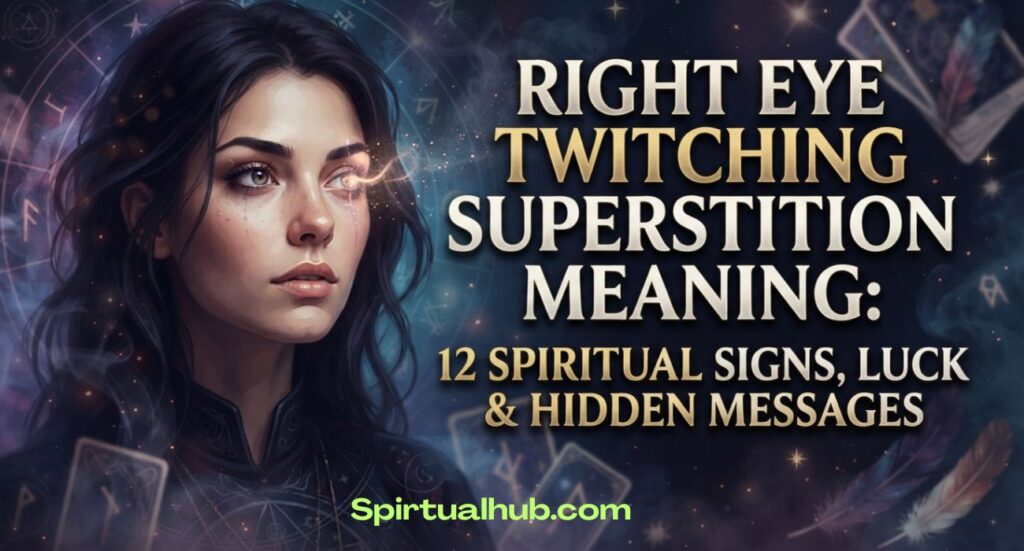
A twitch occurring specifically in the eyebrow area is often tied to intuition and awareness, closely connected to the third eye chakra located at the center of the forehead. This makes the eyebrow region one of the more spiritually significant areas discussed throughout this topic. Many believers view this as confirmation of growing psychic or intuitive sensitivity.
This interpretation encourages paying close attention to dreams, gut feelings, and subtle mental impressions occurring around the same time. Some spiritual teachers suggest this area activates most strongly during meditation practice or periods of deep reflection. It aligns closely with the earlier discussed meaning around heightened intuition.
Given its close connection to the third eye energy center, this area carries some of the deepest spiritual significance among all eye locations discussed. Believers often treat twitches here with particular curiosity and respect. It invites deeper trust in one’s own inner guidance system.
Eye Corners
Twitching specifically at the corners of the right eye often relates to relationship changes or unexpected social encounters, according to several regional traditions. The inner corner is sometimes linked to close, personal relationships, while the outer corner connects more to distant acquaintances or travel-related events. This distinction adds further nuance to the overall interpretation.
Many believers pay attention to this specific area when anticipating visitors, reconnecting with old friends, or navigating shifts within close relationships. This ties closely into broader themes around relationship changes discussed throughout various cultural traditions covered earlier. It offers a more socially focused interpretation compared to other eye areas.
This meaning remains popular among those specifically curious about upcoming social or relational events in their life. It adds a practical, everyday layer to what might otherwise feel like a purely mystical topic. Many find this interpretation easy to relate to their current life circumstances.
Read Also: Spiritual Meaning of Cat Sleeping Above Your Head on Pillow
Both Eyes Versus One Eye
When both eyes twitch simultaneously rather than just the right eye alone, many traditions suggest this signals something larger and more significant happening in your life overall. Rather than a small, isolated sign, this combined twitching often points toward a major life event or substantial energy shifts taking place. This distinction matters significantly across most belief systems discussed in this article.
Single-eye twitching tends to carry more specific, targeted meanings, such as those explored throughout the earlier sections of this guide. Double-eye twitching, by comparison, is often treated as a broader, more powerful signal deserving extra attention. Many believers pause and reflect more deeply when this occurs compared to a single-sided twitch.
This distinction between one eye and both eyes reflects the layered, detailed nature of these spiritual traditions overall. It shows how deeply thought-out these belief systems truly are, even down to small physical details like this. Understanding this difference offers a more complete picture of the entire topic.
Is It Good Luck or Bad Luck for Men and Women?
After exploring countless cultural, religious, and gender-based interpretations throughout this article, one clear pattern emerges repeatedly across traditions. Right eye twitching is most often associated with right eye twitching good luck for men, while frequently linked to right eye twitching bad luck for women in many of the same cultural traditions. This contrast appears consistently across India, Pakistan, and parts of Africa especially.
As one popular saying passed down through generations puts it, “the right eye brings fortune to men, but tears to women.” This quote captures the essence of countless similar sayings found across different cultures and languages throughout history. It reflects deeply rooted cultural patterns rather than any kind of scientific or universal truth.
The table below summarizes these general patterns across the regions and religions discussed throughout this article, though exceptions and regional variations certainly exist.
| Region/Tradition | Meaning for Men | Meaning for Women |
| India (Hindu Tradition) | Good luck, success | Minor trouble, unwanted news |
| Pakistan and South Asia | Good luck, incoming money | Minor trouble, emotional matters |
| Nigeria and West Africa | Good news, financial gain | Mixed, often cautionary |
| China | Depends on time of day | Depends on time of day |
| Western Modern Interpretation | Positive omen, growth | Intuition, emotional healing |
It is important to remember that none of these interpretations represent proven fact, and modern spiritual communities increasingly move away from strict gendered meanings altogether. Many people today choose interpretations that feel personally meaningful rather than strictly following inherited tradition. Ultimately, whether you view your twitch as good luck or simply an interesting bodily sensation is entirely up to you.
FAQ,S
What does it spiritually mean when your right eye twitches?
Spiritually, right eye twitching often symbolizes positive change, spiritual guidance, or an important message. Many traditions also connect it with growth and new opportunities.
Is the right eye twitching lucky?
Many cultures consider right eye twitching lucky, especially for men, while some traditions give different meanings for women. The belief varies by culture and region.
What does twitching on the right eye mean?
Right eye twitching may represent upcoming news, life changes, emotional release, or spiritual awakening. Some people also see it as a sign to stay alert and trust their intuition.
What is the myth about your right eye twitching?
A common myth says that right eye twitching predicts good luck, success, or important events. In some cultures, it can also warn of challenges, depending on gender and timing.
What does the right eye symbolize spiritually?
Spiritually, the right eye symbolizes intuition, awareness, wisdom, and future vision. It is often linked with positive energy, divine guidance, and inner clarity.
Conclusion
The right eye twitching spiritual meaning has been part of many cultures and traditions for a long time. Different beliefs connect it with good luck, change, spiritual guidance, or important life events. The meaning often depends on gender, culture, and the exact place where the eye twitches. At the same time, eye twitching can also happen for simple physical reasons. Looking at both spiritual beliefs and everyday causes gives a balanced understanding of this common experience.
The right eye twitching spiritual meaning encourages people to stay calm and pay attention to their thoughts and feelings. Many traditions see it as a reminder to trust your inner wisdom and welcome positive growth. Whether you believe in spiritual signs or cultural superstitions, these ideas can inspire hope and self-awareness. Keep an open mind, take good care of your health, and continue your journey with confidence, patience, and a positive attitude.