Nose Twitching Superstition and Spiritual Meaning
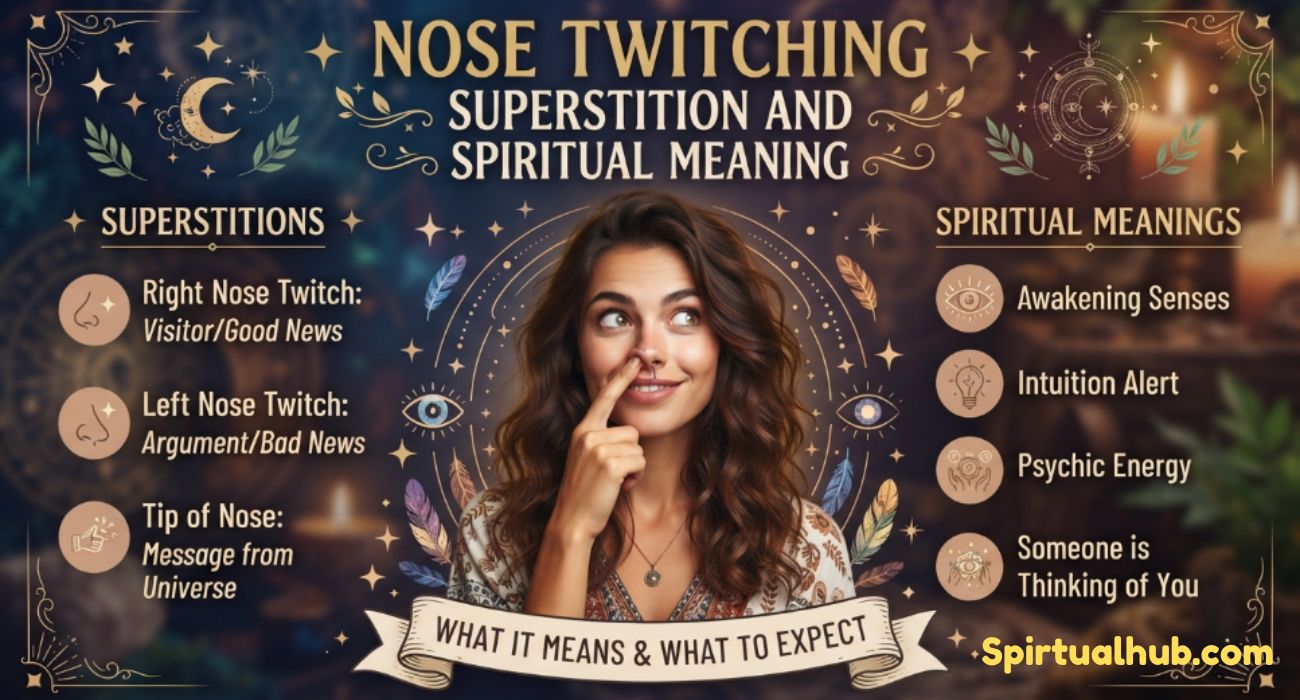
Nose Twitching Superstition is an old belief about a sudden nose movement. People connect it with signs, feelings, visitors, or coming events. These beliefs differ across cultures and traditions.
A small nose twitch can feel strange and surprising. Some people see it as a sign of hidden messages or changing energy. This simple body movement has many interesting stories.
Nose Twitching Superstition and Spiritual Meaning can relate to intuition, emotions, luck, and awareness. Some traditions give different meanings to each nose area. The side and timing may also change the meaning.
What Does a Twitchy Nose Symbolize?
A twitchy nose is a small, quick movement of the nose or the skin around it. It may feel like a tingle, a flutter or a tiny jump. It can come and go through the day. The nose twitching spiritual meaning starts with this simple, physical moment. People notice it because it comes without warning.
In many belief systems, the nose stands for breath and life force. Breath is the first thing we take at birth and the last thing we give at death. So the nose is often seen as a gate for energy. This is why nose twitching symbolism often links to nose twitching energy and awareness. When the gate moves, some people feel that a message is passing through.
Read Also: Spiritual Meanings of Bird Pooping on You (Good Luck?)
Still, nose twitching signs are never fixed. The meaning depends on your thoughts at that moment. It also depends on the side, the timing and the feelings you carry. Think of it like a soft knock on a door. It asks you to pause and look inward. The 12 meanings below will help you read that knock. Many people describe these as nose twitching messages that only make sense in context.
12 Spiritual Meanings of Nose Twitching
Spiritual writers list many ideas about this sign. The 12 below appear again and again in modern nose twitching beliefs. You do not need to accept all of them. Read each one, and see which feels true to your life. The best meaning is the one that fits your moment.
1. Awakening and Intuition
Many people link nose twitching intuition to a rising inner voice. You may feel a twitch just as a gut feeling appears. Some call this a nose twitching spiritual awakening. The idea is simple. When you become more aware, your body also becomes more alert. Small signals feel louder than before.
This meaning is tied to nose twitching intuition and awareness. The nose sits close to the area of the “third eye” in spiritual language. That is the space between the brows. Many traditions say this spot holds insight and inner sight. So a twitch near the bridge may feel like a gentle nudge from within.
Try this tip. When your nose twitches, pause for a breath. Ask yourself what you were thinking just before it. Often, the answer is a hidden worry or a hidden hope. Writing it down builds trust in your inner voice. Over time, you may see a clear pattern.
2. Emotional Messages and Life Shifts
The body reacts to feelings before the mind can explain them. This is why nose twitching emotions matter in spiritual reading. A twitch may show up during stress, grief or joy. It can be a sign of nose twitching hidden emotions that you have not yet named. Your body may say what your mouth cannot.
Many people also connect this sign with nose twitching life changes. Picture a woman who is thinking about leaving her job. She feels a small twitch each time she reads her resume. She may take it as a nudge that change is near. This is a simple example, but it shows how the belief works in daily life.
These nose twitching emotional shifts often come in waves. You may feel calm one day and restless the next. The twitch is a small reminder to check in with yourself. Take a slow breath, and ask what you truly feel. Naming the feeling often makes the twitch fade away.
3. Patterns Carry Meaning
One twitch may mean very little. A repeating twitch may mean more. Spiritual readers say that patterns carry the message. If your nose twitches at the same hour each day, note it. If it happens while you talk to one person, note that too. These nose twitching signs form a story over time.
A simple journal helps here. Write the date, time, side of the nose and your mood. After two weeks, read it back. You may see that twitches come after coffee, or before stressful meetings. That is useful, and it also keeps you grounded. It helps you split spiritual meaning from plain habit.
This is where body signs and spiritual meaning meet real life. Good spiritual practice does not ignore facts. It asks you to observe with care. A pattern tells you where to look. Then you can decide if the cause is emotional, spiritual or physical. Often it is a mix of all three.
4. Staying on the Right Path
Some people feel a twitch right after a good choice. They take it as a sign that they are on track. This is one of the more hopeful nose twitching spiritual signs. It says that your actions match your inner truth. It feels like a quiet “yes” from within.
Think of a student who just chose a new career path. Right after she signs the form, her nose gives a small flutter. She smiles and takes it as approval. Whether or not it is truly spiritual, the feeling gives her courage. Belief can be a tool for calm and focus.
Still, a sign should not replace good sense. Use it as one voice in the room, not the only one. A nose twitching higher self message, as some call it, should agree with your values. If it pushes you toward harm, ignore it. A true guide leads toward peace, not fear.
5. Energetic Shifts and Expansion
Many people feel nose twitching energy during meditation, prayer or deep rest. They say it feels like energy moving through the face. This is often called a nose twitching energy shift. In spiritual language, it may mean your mind is opening. It may also mean old tension is leaving the body.
Energy work traditions say the head holds many subtle pathways. When these open, you may feel tingles, warmth or pressure. The nose can join in with a small twitch. This is why physical sensations and spirituality are so often mentioned together. The body becomes a kind of radio, and the twitch is a small signal.
If this happens to you, stay calm. Breathe slowly through the nose and relax your jaw. Let the feeling pass without fear. Many practitioners say a steady breath keeps the experience gentle. If it feels too strong or worrying, stop and rest. Your comfort always comes first.
6. Confirmation from Guides
Some believers say that guides, angels or ancestors use small body signals. A twitch may be their way to say “yes, we hear you.” These are called nose twitching divine messages in many spiritual circles. The idea is that unseen helpers use gentle signs, since loud signs would scare us.
Here is a simple case study. A man is asking himself if he should forgive an old friend. As he thinks, “I should call him,” his nose twitches. He takes it as a green light and makes the call. The friendship heals. Was it a guide, or his own heart? Only he can say. Yet the sign gave him the push he needed.
Try asking a clear question in your mind. Then watch for calm feelings, not just twitches. A true confirmation feels steady and peaceful. If you feel fear or pressure, wait and think again. Good guidance brings clarity, not panic. Let the sign support your wisdom, not replace it.
7. Alerts for Important Messages
Many folk beliefs say a twitch comes right before news. You may get a call, a text or a visit soon after. These are known as nose twitching important messages. People say the nose acts like an antenna. It picks up a change in the air before the mind sees it.
This belief also links to nose twitching communication. A twitch during a chat may hint that the other person is hiding something. Or it may hint that a key point is being made. Some readers say it means you should listen more closely. It reminds you to slow down and pay attention.
Try a simple test for 48 hours. When the twitch comes, stay alert and open. Note any news, calls or meetings that follow. Some days you will see a link, and some days you will not. That is fine. The goal is not proof. The goal is to grow more mindful of your daily life.
8. Cosmic Signals and Intuition
Some people tie a twitching nose to moon phases, eclipses and planet shifts. They call these nose twitching cosmic signals. The idea is that sensitive people feel big cosmic changes in the body. A full moon, for example, is often said to raise emotions and energy. A twitch may show up on those days.
This is a belief, not a proven fact. Yet many people do feel restless around a full moon. They sleep less and feel more alert. In that state, small body signals feel bigger. Nose twitching intuition may grow stronger too. The nose is simply one place where the feeling shows up.
The table below shows a common folk view. Treat it as a fun guide, not a rule.
| Cosmic Moment | Folk Belief About Twitching | Suggested Reflection |
| New moon | New start is near | Set a fresh goal |
| Full moon | Emotions are high | Rest and release stress |
| Eclipse | Big change ahead | Stay flexible |
| Mercury retrograde | Messages may get mixed | Double-check plans |
9. Sign of Personal Growth
A twitch may mark a time of change and healing. Many say nose twitching personal growth appears when you form new habits. It may show up when you leave an old pattern behind. In this view, the body celebrates and resists at the same time. Growth can feel odd before it feels good.
This ties to nose twitching personal insight. You may have a sudden idea about your life. A twitch may appear as the idea lands. It can feel like a tiny bell that says, “remember this.” Many readers say these moments happen during walks, showers or quiet mornings.
Use the moment well. Write the insight down before it fades. Then take one small action toward it. Small steps make real change. A sign has no power unless you use it. The twitch may start the story, but you write the rest.
10. Connection Between Sensation and Insight
This meaning is about the link between body and mind. A twitch is a physical event. An insight is a mental event. Spiritual teachers say they are two sides of one coin. This is the core of physical sensations and spirituality. When you feel deeply, you often think deeply too.
Mindfulness practice supports this idea. When you slow down, you notice small signals like a twitch or a flutter. Research on mindfulness shows that body awareness can reduce stress. So even for skeptics, the habit is useful. Noticing your body helps you notice your needs.
Here is a quick grounding exercise. Sit still and place your feet flat on the floor. Take five slow breaths through your nose. Feel the air come in and go out. Notice any twitch without judging it. This simple habit calms the mind. It also builds trust in your own inner signals.
11. Indicators of Luck and Fortune
In many families, a twitch means money or good news is coming. People say nose twitching luck and nose twitching fortune go hand in hand. Some think the tip of the nose brings gifts. Others think the right side brings a lucky break. These sayings are passed from grandparents to kids.
This belief is popular because it is hopeful. It makes a small twitch feel like a wink from fate. You may smile and feel lighter. That lift in mood can even help you act with more confidence. Confidence often creates real chances. So luck may grow from the belief itself.
Still, keep a balanced view. Nose twitching good luck is a fun tradition, not a promise. Do not spend money because your nose twitched. Enjoy the sign, and then use good judgment. Real fortune comes from action, effort and wise choices. The twitch is simply a happy little bonus.
12. Protective Energy and Support
Some people feel a twitch when they are in a tense place. They take it as nose twitching protective energy. It may feel like a soft warning or a gentle shield. In this view, unseen helpers stand near you. The twitch says, “we are here.”
Picture a woman walking alone at night. Her nose twitches, and she feels alert. She chooses to take a safer route. Nothing bad happens, and she feels thankful. Was it luck, instinct or spirit? Many would say it is all three. Good instinct often feels like a body signal.
A simple ritual can deepen this sense of support. Take a moment of gratitude, breathe deeply, or say a short prayer. Ask for calm and safety. Rituals like these settle the nervous system. They also remind you that you are not alone. That comfort is worth more than any sign.

Superstitious Meaning of Different Area of Nose Twitching
Where the twitch happens matters in folklore. Old sayings give each part of the nose its own message. This is the heart of nose twitching folklore. The meanings differ from place to place, and many sources disagree. So read these as traditions, not rules. Let your own experience guide you.
Tip of the Nose
The tip of nose twitching meaning is often tied to talk and visitors. Many old sayings say someone is speaking about you. Others say it is a sign of nose twitching visitors or nose twitching unexpected visitors. Some also say nose twitching someone thinking about you fits here. A tingle at the tip may feel like a small “hello” from far away.
This area is also linked to social life. It shows up when you plan to meet friends or family. Some people feel it before a party or a reunion. That is why the tip is known as the “social” spot. It says your energy is about to meet other people’s energy.
If you feel it, stay open and kind. Check your phone, or expect a knock at the door. You can also simply smile and think good thoughts about the person. This is a gentle way to enjoy the belief. It brings warmth to a small moment.
Bridge of the Nose
The bridge of nose twitching meaning is tied to decisions and focus. This spot sits near the brow, which many call the third eye. So it links to insight, thought and vision. Spiritual readers say a twitch here means a choice is near. It may also mean you should think before acting.
This area often twitches when the mind is busy. Long screen time, eye strain and worry can all play a part. Spiritually, that means your mind is overloaded. Physically, it means your face muscles are tired. Both views point to the same advice. Slow down and rest.
Try a simple pause. Close your eyes for one minute. Rest a finger gently on the bridge and breathe. Ask what decision needs your attention. Often, the answer comes in the quiet. A clear mind makes better choices than a rushed one.
Left Nostril
The left nostril twitching meaning is often tied to feelings and intuition. Many traditions link the left side to the inner, receptive and feminine side. So a left twitch may point to emotions or old memories. Some also see it as a soft warning to be careful. It asks you to look inward.
This side is also linked to messages from the past. You may think of someone from long ago. You may recall a talk that never felt finished. The twitch may be a small push to heal that story. Forgiveness and closure often come with this sign.
Do not fear it. A left twitch is not doom. It is more like a gentle tap on the shoulder. Take some quiet time to journal or pray. Ask what your heart needs to say. Honest reflection is the best answer to this sign.
Right Nostril
The right nostril twitching meaning is often tied to action and good news. Many traditions link the right side to logic, outer life and the masculine side. So a right twitch may signal an opportunity. It may say to move forward with a plan. It can also point to news about work or money.
In some homes, this is the “lucky” side. People say a right twitch brings a small gift or a happy call. Others say it means success in a project. These are cheerful beliefs, and they often lift the mood. A good mood is a helpful thing to have.
Use this sign as a nudge to act. Send the email, make the call or start the task. The twitch does not guarantee a result. But it may give you the courage to try. Action, not the sign, creates the outcome.
Sides of the Nose Near the Cheeks
Sides of nose twitching are tied to relationships and social ties. The area near the cheeks is seen as the “connection” zone. A twitch here may point to news from loved ones. It may also point to a change in a friendship or family bond. These are often mild, everyday messages.
This spot is also linked to nose twitching social encounters. You may meet someone new soon. You may run into an old friend by chance. Some say it also warns you to watch your words in a group. Kind speech keeps bonds strong.
If you feel it, reach out to someone you care about. Send a short text or make a small call. Even if the sign means nothing, the kind act helps. Warm ties are good for the heart. This is one belief that always leads to good.
Entire Nose Twitching Together
Whole nose twitching is seen as a strong sign in folklore. When the entire nose moves, the message feels bigger. Some say a major shift is near. Others say it is a call to pay full attention. It can also mean you have taken on too much.
This kind of twitch often comes with stress or a racing mind. That is why many spiritual guides call it a “pause” sign. It says to stop, breathe and check in. Your mind and body are asking for a break. A calm reset often makes the twitch fade.
Because it feels strong, keep an eye on it. If it comes often, think about both spirit and health. Track it in your journal. If it keeps going, speak to a doctor. Caring for the body is also a spiritual act.
Table: Common Nose Twitching Areas and Their Traditional Interpretations
The table below sums up the nose twitching for females and males debate, plus the main areas. It is a quick guide, and traditions vary. Use it as a fun map, not as a rule.
| Area of Nose | Traditional Superstition | Spiritual Theme | Suggested Action |
| Tip of nose | Gossip or a visitor | Social awareness | Stay mindful of words |
| Bridge of nose | A decision ahead | Intuition and focus | Reflect before choosing |
| Left nostril | Emotional message | Inner feelings | Journal or meditate |
| Right nostril | Good news or action | Opportunity | Take a step forward |
| Sides near cheeks | Relationship news | Connection | Reach out to loved ones |
| Whole nose | Strong sign | Big shift | Pause and reflect |
Nose Twitching Superstitions for Females and Males
Many old beliefs give different meanings to women and men. Often, the left and right sides swap roles between the two. Modern readers see this as symbolic, not literal. Still, the idea is very old, and it shows up across many lands. Here is how the nose twitching for females and nose twitching for males traditions work.
For Females
In many traditions, nose twitching for females points to emotion, family and intuition. A left twitch may hint at a message about love or home. A right twitch may hint at a gift or news about money. Some older sayings say a twitch means a female visitor is on the way. Others link it to a family event.
Consider a simple case study. A mother feels a left nostril twitch while she cooks. She thinks of her sister and decides to call. Her sister had just been thinking of her too. They laugh about it for an hour. Whether it is spirit or chance, the call brought joy.
Modern women often use the sign as a check-in tool. They pause and ask what their heart needs. That is a wise use of an old belief. It turns a superstition into self-care. It also builds trust in nose twitching intuition.
For Males
In many traditions, nose twitching for males points to work, travel and effort. A right twitch may hint at career news or a chance to lead. A left twitch may warn of a rival or a delay. Some sayings say it means a fresh path or a trip. Others link it to money that is coming in or going out.
Here is a short reader-style example. A man feels a right nostril twitch before a big meeting. He treats it as a boost and speaks with confidence. The meeting goes well. He tells his friends it was his lucky twitch. The belief helped him feel bold, and that mattered.
Keep in mind that the gender split is folklore. It does not decide your fate. Your twitch may mean something else entirely. The most helpful meaning is the one that guides you toward good action. Personal meaning always beats a fixed rule.
Read Also: Red Butterfly Spiritual Meaning and Symbolism
Cultural and Religious Interpretation
Nose twitching beliefs are found all over the world. Each culture adds its own story. This shows how deeply people want to read the body’s signals. The cultural meaning of nose twitching ranges from lucky signs to gentle warnings. Let us take a tour through these traditions, with respect for each one.
Ancient Folk Traditions
Ancient nose twitching beliefs come from old body-omen systems. Many early societies watched twitches, itches and sneezes for signs. Ancient Greeks and Romans, for example, paid close attention to sneezes as omens. Twitching was often read the same way. The body was seen as a natural oracle that spoke without words.
In old European villages, sayings were shared by word of mouth. Families taught these to their children as small rules of life. A twitch could mean a guest, a letter or a bit of luck. These stories made daily life feel magical. They also gave people a sense of control over the unknown.
These early beliefs did not need proof. They worked as comfort and as shared culture. They also carried real observation, since people did notice patterns. Many of today’s traditional body superstitions come from these roots. They remind us how long humans have listened to their own bodies.
Asian Cultural Beliefs
Asian nose twitching beliefs are rich and detailed. In parts of China, body twitches have long been read as omens tied to the time of day. Some sayings say a twitch at a certain hour brings visitors or news. In India, old texts on body signs, known as shakuna traditions, give meanings for twitches by side and by gender.
In many of these systems, the right side is linked to men and the left to women. This matches some of the gender beliefs above. Japan and Southeast Asia also have folk sayings about itching and twitching. Some say a twitch means someone is talking about you. Others say it means a guest is near.
These traditions often mix spirit, health and daily manners. They are taught as gentle wisdom, not strict law. Many families still share them today. If you follow one, treat it with care and curiosity. Its heart is about being aware of the world around you.
African and Caribbean Traditions
African nose twitching traditions and Caribbean nose twitching traditions often see the body as a channel for ancestors. A twitch may be a message from those who came before. It may signal a warning, a blessing or a call to pay attention. Oral stories carry these ideas from elders to the young.
In many Caribbean homes, sayings about itches and twitches are still common. A twitch may mean a visitor, money or news. Some link it to protection and the need to stay alert. These beliefs often blend older African roots with later faith traditions. The result is rich and layered.
What stands out is the sense of community. The sign is often shared with family, who then help read it. It is not a lonely act. It is a group story. This reminds us that meaning grows when people talk. Sharing beliefs keeps culture alive.
Western Folklore
Western nose twitching folklore is often lighter and playful. In the US and UK, many families say a twitch means a visitor is coming. Others say it means gossip, or a kiss, or a fight. The sayings vary a lot from home to home. Most are told with a smile.
The itchy nose superstition is even more famous than twitching. Many people have heard that an itchy nose means a visitor or a surprise. Some say a nose burning spiritual meaning points to heated talk or strong emotion. These sayings spread through books, films and family talks. They became part of everyday speech.
Pop culture also keeps the idea alive. Cartoons and stories show a twitching nose as a sign of magic or of a sharp sense. That image is friendly and playful. It helps people see the belief as a gentle tradition. In the West, it is mostly used for fun and a bit of wonder.
Religious Point of View
The religious meaning of nose twitching is not fixed. Most major faiths do not give nose twitching a set meaning. Many actually caution against trusting omens over faith. Christian teaching, for example, tends to place trust in God and prayer rather than in body signs. Islamic teaching also warns against belief in omens and stresses trust in Allah.
Hindu traditions have a long history of reading body signs, as noted above. Yet many teachers say it should not replace duty and good action. Buddhist views focus on mindfulness. A twitch is seen as a passing sensation to notice and let go. The goal is calm, not fear.
The table below gives a simple view of these faith positions.
| Faith Tradition | General View on Body Omens | Common Advice |
| Christianity | Trust God, not omens | Pray and stay faithful |
| Islam | Omens are discouraged | Rely on Allah |
| Hinduism | Some body-sign traditions exist | Balance signs with duty |
| Buddhism | Sensations are passing | Observe with mindfulness |
Medical and Scientific Causes of Nose Twitching
Now let us look at the science. Most twitches have simple, physical causes. It is wise to know these before you assign a spiritual meaning. This keeps you safe and calm. Good spiritual practice always respects health. Please note this section is general information and not medical advice.
Common Harmless Causes
Most nose twitches are harmless. The most common cause is a small muscle spasm, often called a fasciculation. Stress, anxiety and poor sleep can trigger it. Too much caffeine is another usual cause. Dry air, allergies and a stuffy nose can also make the area feel twitchy.
Habit tics play a role too. Some people rub, wrinkle or flick their nose without noticing. Screen use and eye strain can add tension to the face. Even long hours of focus can do it. In many cases, rest and water fix the problem within days.
Here are some quick facts. Twitching that comes and goes is very common. It often fades on its own. Cutting back on caffeine and sleeping more helps many people. So does managing stress with walks and deep breaths. This is a good time to note how nose twitching emotions and body stress overlap.
Vitamin and Mineral Deficiencies Linked to Twitching
Muscles need certain nutrients to work well. When levels are low, twitching can happen. Magnesium, calcium and potassium are the top ones. Vitamin D and vitamin B12 also matter for nerves and muscles. A poor diet, heavy sweating or some medicines can lower these levels.
The table below shows the main nutrients and where to find them. Food is a great first step. Do not take large doses of supplements without advice. A blood test can confirm if you truly have a deficiency.
| Nutrient | Possible Effect on Muscles | Food Sources |
| Magnesium | Spasms and twitching | Nuts, spinach, beans |
| Calcium | Cramps and tingling | Milk, yogurt, greens |
| Potassium | Weakness and twitches | Bananas, potatoes |
| Vitamin D | Muscle weakness | Sunlight, fish, eggs |
| Vitamin B12 | Nerve issues and tingling | Eggs, meat, fortified foods |
When Nose Twitching Could Be Neurological
In rare cases, twitching may link to the nervous system. Nerve irritation in the face can cause repeated spasms. Tic disorders, such as Tourette’s, may include facial tics that involve the nose. Hemifacial spasm is another rare condition, in which one side of the face twitches. Bell’s palsy can also affect facial nerves, though it usually causes weakness.
These conditions are uncommon. Yet it helps to know the warning signs. A twitch that spreads to other parts of the face is one sign. A twitch that stays for weeks is another. Weakness, numbness or drooping should never be ignored.
Do not panic if you read this list. Most twitching is simple and harmless. But do not brush off a strong or lasting pattern either. A doctor can check the cause with a simple exam. Early care is always better than worry.
When to See a Doctor
See a doctor if the twitching lasts for several weeks. Also go if it spreads to your eyes, cheeks or mouth. Pain, numbness, weakness or drooping on one side of the face are serious signs. Headaches, vision changes or trouble speaking also need quick care. In such cases, seek help right away.
You can help your doctor by tracking your twitches. Note when they happen, how long they last and what you were doing. Cut down on caffeine, drink more water and get good sleep. Try gentle stretching and rest for your face and eyes. These steps often calm mild twitching.
Remember that this article is not medical advice. It is a guide to help you ask better questions. Your doctor knows your health best. Caring for your body is the first spiritual step. A healthy body helps you hear your inner voice more clearly.
Is Nose Twitching a Bad Omen?
The short answer is that it usually is not. A nose twitching bad omen belief does exist in some places. Some sayings link the left side, or a night twitch, to a warning. Others say it means gossip or a quarrel. Yet most traditions treat it as a mild alert, not a curse. It is a call to pay attention.
Why does the fear spread? Because unknown signs feel scary. When something happens without cause, the mind looks for a reason. A twitch followed by bad news can feel like a link. But the brain often connects events that are not truly related. This is called confirmation bias. We remember the times the sign “worked” and forget the times it did not.
So here is a balanced view. Use the twitch as a moment to reflect. Ask what you feel and what you need. If the twitch keeps happening, get a health check. Look for nose twitching hidden meaning in your own life, and stay calm. Peace of mind matters more than any omen. In the end, nose twitching superstition and spiritual meaning is about listening with care, not living in fear.
FAQ,S
What Does Nose Twitching Mean Spiritually?
Spiritually, nose twitching is often believed to symbolize intuition, heightened awareness, emotional changes, or an upcoming message.
What Does Twitching of the Nose Mean?
Traditional beliefs may connect nose twitching with visitors, conversations, social changes, or someone thinking about you.
What Does Twitching Mean Spiritually?
Spiritual traditions may view twitching as a subtle sign of energy shifts, inner awareness, or personal transformation.
Which Vitamin Deficiency Can Cause Nose Twitching?
Nose twitching is not usually linked to one specific vitamin deficiency. Low magnesium, calcium, or certain B vitamins can contribute to muscle twitching in general.
Can Low Vitamin D Cause Twitching?
Low vitamin D can contribute to muscle weakness or cramping, and severe deficiency may be associated with muscle spasms, but it is not a specific cause of nose twitching.
Conclusion
Nose Twitching Superstition and Spiritual Meaning can have many meanings in old beliefs. People often connect a twitching nose with intuition, messages, visitors, luck, and emotional changes. The exact meaning may depend on the nose area, side, and situation. Some traditions see it as a sign of personal growth or spiritual awareness. Others connect it with social events, important talks, or changes in daily life. These ideas come from folklore and cultural traditions passed down over many years.
A nose twitch can also have simple physical causes, such as stress, tiredness, or muscle activity. Spiritual beliefs can offer a cultural way to understand this small body sign, but they do not replace medical knowledge. If twitching continues or causes discomfort, it is helpful to speak with a health professional. Understanding both traditional beliefs and physical causes gives a balanced view of nose twitching.
Related Posts:
1: Shoulder Twitching Superstition & Spiritual Meaning (Right, Left)
2: Yawning Spiritual Meaning and Superstition: 15 Signs You Need to Know
3: Belly Button Piercing Spiritual Meaning & Symbolism (2026 Guide)
4: Color Black Spiritual Meaning, Symbolism & Psychology
5: Calf Twitching Spiritual Meaning & Superstition (Right, Left)